
3.14
I am getting mail wishing me a happy Pi Day. My daily puzzles are tormenting me with π-themes clues—and there are only so many π / pie puns I can stand, if I am not making them myself.
I had no objection to becoming more acquainted with π as I studied Biblical Greek. I accepted it as a standard part of the general program of the torment when I took high school trigonometry. And I fully intend to call it to my aid should I ever find myself desperate to find the area of a circle, though at this moment I do not anticipate pricing wall-to-wall carpet for either a silo or an igloo. But I question the idea that π, alone among Greek letters and irrational numbers, merits a day of its own each year.
It is consoling that I need not face similar mathematical jollification in June. Needy Pi, beginning with “3.14,” writes itself into your datebook. (I’m almost surprised that the irrational thing hasn’t registered for gifts at Williams Sonoma: there are endless pie-themed gift options.) But Avogadro’s number is a modest constant. Beginning with “6.0,” it says, “You might think of me in June, but don’t waste a whole day on it.” I must say, I am grateful. Just imagining the crosswords filling with moles and puns joining their atomic and mammalian varieties makes me want to binge-eat a whole π.
Final Commemcement

For the last 10 years, I have regularly visited a college campus not as a student, not as a professor, but as a trustee. Being a trustee of Fontbonne University has been a role I have taken seriously, so I have been on campus fairly often. There have been board meetings and committee meetings, parties and receptions, and, as Fontbonne was a Catholic university, Masses. I have also been there for lectures, plays, concerts, and tours of facilities of many sorts. And I have played my role at ceremonial occasions, attending all the commencements and convocations I could. And today, in what may have been my last visit to campus, I played a new role, receiving doctorate of humane letters, honoris causa, and serving at the speaker at Fontbonne’s final commencement.
While a recognition of loss is a natural part of a university’s final commencement, the mood was mostly one of celebration. We are proud of the achievements of the students who received their doctoral, master’s, or bachelor’s degrees today. We are proud of the faculty and staff who have remained at work to help those students complete their studies and join in this final ceremonial celebration of our common enterprise. And we are proud that we are closing only after having given every student a chance to complete his studies, if not on on campus, at a university that will recognize all the work he has already completed. Thanks to President Nancy Blattner and Provost Adam Weyhaupt, we can be as proud of the way in which Fontbonne has closed its doors as of anything in its history.
These final commencement exercises were held in Doerr Chapel, the heart of Ryan Hall. Ryan Hall is the oldest building on campus and its center. Its design, like those of so many main buildings at American universities, embodies a particular vision of what a college is. The main entrance is up a fight of stairs, for scholarship is an elevated enterprise. You then enter what is at once a hallway leading to rooms where people pursue their various disciplines and a common room where all may gather. If you do not linger in this space, you are at the entrance to chapel, for the worship of God is central to life of the college, not peripheral. The message embodied in the architecture has been obscured as colleges have grown too large to fit in a single building and the original structures have been taken over by administration. But from Nassau Hall at Princeton to Fontbonne’s Ryan Hall, that was the message built into the structure of the building at their founding.
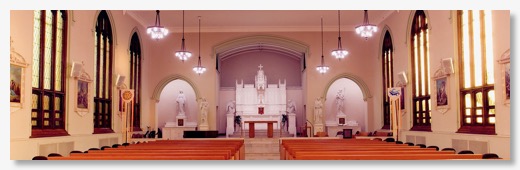
The “Prayer Hall” at Nassau Hall has been renamed the “Faculty Room” and refitted to look like the British House of Commons. At other colleges the central chapel has been transformed into an auditorium. But at Fontbonne the chapel remained a chapel to the end. I am glad to say that its altars and sacred furnishing will find new homes in the chapels of a high school and a graduate school of theology. And I am glad our final commencement was held there, rather in a gym or even outside in the quadrangle (through our spring commencement there was lovely).
The video of the final commencement is not of the highest quality—our best videographer may have been working on a touching legacy video, which uses film from our penultimate commencement in May—but here is the film I have of the conferral of my degree and my remarks. (It will open in a new window and may take some time to load.)

Here is the link to my Remarks at Fontbonne University’s Final Commencement Exercises. (Those who watch the legacy video will see that my opinions on academic dress were not shared by all members of the university community.)
Penance and Bird Poop
It’s understandable. They’re overcompensating for belonging to a church that rediscovered all the things they like only after trashing them for a couple centuries. Anyway, my friend’s great-aunt, or whatever she was, got to reading up on the medieval church, which, as you know from your Chaucer, was a lot more fun than the Church the Tudors had bequeathed to her. Not that fun was exactly what she was looking for. She began worrying that just saying the General Confession and the Prayer of Humble Access along with everybody else every Sunday might not be sufficient atonement for personal sins. That became especially true after the old frank recognition that we are all miserable offenders whose vile bodies need divine cleansing was transformed by Prayer Book revision into something that sounded more, “Oh well, nobody’s perfect.” When she mentioned her concerns in the family, they wondered if she was going to ask the rector to start hearing confessions. Her response was that she had no objection to auricular confession, but as the rector was the most amusing gossip in the Back Bay, she didn’t think it would be for the good of his soul or her reputation if the practice were instituted in her parish.
All the same, she said, it was clear to her than in the early church penance was done individually and publicly. Her family didn’t pursue the topic farther and put it out of their minds until they began getting the phone calls. Why was their aunt to be seen every Saturday morning on her hands and knees scrubbing the steps of the Church of the Advent? The parish had staff to do that! They raised the subject with the old lady when they were next at the same dinner table. She answered, “I am following the practice of the primitive church and atoning for my sins.” Like the rest of his family, my friend was tempted to ask if the Advent’s steps were helping her work off any sins in particular, but none of them dared. Such a question would have been met with an icy glare and a reminder that there were a number of questions a gentleman did not ask a lady, and that while she accepted that among the fellows gathered round that table there were a number of miserable offenders who were not worthy to sweep up the crumbs under the Lord’s table, she would hate to think even one of them was not a gentleman.
The dear lady on the steps of the Church of the Advent came to mind when I began wondering if anyone was calling my friends and neighbors. I have been seen on my hands and knees cleaning the steps recently. But I wasn’t down at the Cathedral, whose steps would take a while. I was at my own home. Removing a pile of bird poop does seem like a thoroughly penitential act, and it is indeed a large part of cleansing any ecclesiastical portico. But I was doing it at home, and I was neither carrying out a penance imposed on me in the confessional nor even thinking (much) about St. Francis while I was doing it. It was not sin that got me on my knees. It was charity.
I realized some weeks ago that a pair of sparrow or wrens or members of another one of those deceptively cute species were gathering material for a construction project, and that the site they had chosen was the carriage lamp over my front door. I knew that a few visits to the job site with my leaf blower over the next couple days would put the kibosh on this development more effectively than a California environmental inquiry. But I recalled something about “the foxes have their dens and the birds have their nests.” Foxes have never wanted to the share the house with me, and I have evicted a groundhog and made a few possums feel unwelcome, but maybe I could make up for the Son of Man not having a place to lay his head—which is, I know, my fault—by letting the avian couple set up their temporary Additional Dwelling Unit over the front door. At least they would be safe inside the lamp. A pair of mourning doves built a nest on the narrow ledge over the door a few years ago without thinking about how big a young mourning dove can get before gaining the ability to fly. I rushed the fledgling that lay like Icarus on my front mat to the Animal Emergency Clinic, but they could do nothing, and I resolved to get out the blower whenever a hint of a nest appeared on that ledge.
But these were smaller birds, and the unit they proposed was inside the lamp—and, since I have replaced all the incandescent bulbs with LEDs, even when the light was on, it was

I’m just as happy that I was at my own front door rather than at a Gothic church porch or a Byzantine cathedral portico, but if I had to be assigned a public penance, this isn’t a bad one. There are appropriate biblical texts on which to mediate while you do the job. Matthew 23:31-31 is the first that comes to mind. “Are not two sparrows sold for a penny? And not one of them will fall to the ground without your Father’s will. But even the hairs of your head are all numbered. Fear not, therefore; you are of more value than many sparrows.” If you want something Biblical that focuses on bird poop in particular, you can turn to the Book of Tobit, where Tobit’s blindness is the result the sparrow poop that has fallen in his eyes, aggravated by the ointments that the doctors prescribe to treat it. Tobit is a text that repays study, and who can’t be charmed by a piece of scripture that includes both sparrow poop and a pet dog? But it is all a little too convoluted to focus on while you scrub, and the sparrow poop sections, at least, have never been set to music you might hum as your work.
When it comes to tunes, Matthew 10 is the text to turn to. I can call to mind both a widely-loved gospel song and a track from one of Bob Dylan’s under-appreciated “Christian” albums. But thinking about them both makes me wonder exactly how I should understand the comfort they offer.
Every American, even those of us who don’t sing gospel songs, has heard Civilla D. Martin’s take on this passage in the setting by Charles H. Gabriel.
I sing because I'm happy
I sing because I'm free
His eye is on the sparrow
And I know he watches me.
Many people have found this song inspiring and uplifting, and the idea that God is watching over us should be comforting. But his eye is on the falling sparrow, so, I may be just a wreck like the little mourning dove I took to the emergency vet, albeit a a more valuable one, if in materials alone. That idea does not fill me with simple happiness. And the truth is, I don’t always feel all that free and happy. But I hum the tune in hope I will.
Bob Dylan read St. Matthew more carefully, and I hum him, too.
I hear the ancient footsteps
like the motion of the sea
Sometimes I turn, there’s someone there,
other times it’s only me
I am hanging in the balance of the reality of man
Like every sparrow falling, like every grain of sand.
God’s eye is on us when we fall, perhaps even more than when we fly. And doubtless he has his eye on those of us who are just cleaning the bird poop off the steps.
On Ghosts and Ghosting
When someone uses “ghost” as a verb, it suggests the latter. “She ghosted me” means, “I expected her to call/show up/write but she didn’t, and I have no idea why.”
But if we are talking about ghosts, not ghosting, we mean the opposite. A ghost is not the person who does not show up when you expect him to and then fails to provide an explanation. A ghost is the person who appears even though the explanation of his absence is an accepted fact. Death makes one’s presence, no matter how much it is feared or desired, an impossibility in most common sense or scientific worldviews, and it serves as the one excuse for not keeping an engagement for which even the strictest system of etiquette does not require an apology. Logically, then, the language of relationships should use the verb “to ghost” to cover the actions we variously call “stalking,” or “not getting the message,” or “not being willing to make a clean break,” rather than for one of the many ways in which one is told that someone “is really just not that into you.” But who expects logic in matters of the heart?
While I have been ghosted, my experience of actual ghosts is quite limited. Although I have had something to with several old, scary houses and any number of badly maintained graveyards, neither strangers nor acquaintances have ever returned from the great beyond to so much as rattle a chain. That is not because I am not open to a visitation from the beyond. My literary interests dispose me to welcome a haunting. And my theological studies have not made me less welcoming, though they may have put off the ghosts. They may foresee my tactless questions. “Have you been through your particular judgement? If so, are you in heaven, hell, or purgatory? Are you here to help me, to get me damned, or as part of your own penance?” You can tell that Hamlet’s father would have preferred it if he hadn’t begun pestering the old man about whether he was a “spirit of health” or a “goblin damned.” Both the Hamlets probably talked more than is good for any relationship, whether with live people or dead ones. Or course, many ghosts don’t leave any opening for conversation. It wasn’t Banquo’s talking too much that broke up lady Macbeth’s party.
One ghost story from my own circle involved neither conversation nor even a visual appearance. After my mother died, both my brother and our housekeeper said that they thought she had been in the car with them while they were driving alone. What made them think that? They could suddenly spell her perfume. Even today, if I experienced an olfactory haunting, I would be able to greet the phantom is the passenger seat by her “signature scent.” If she was one of the aunts who became my guardians, I would know it was Allie from Toujours Moi or Katie from Bal de Versailles. If the scent were Chanel No. 5, it would be my mom. But I never smelled it. That is one of the reasons I believe this haunting was real. It would be just like mom to visit my brother and the housekeeper and not bother with me.
But back to ghosting.
A few years ago, my former fiancée ghosted me. We had stayed distant friends for decades, but she then just stopped sending me Christmas cards and didn’t respond to an e-mail I sent about a student. I didn’t see why she would ghost me as a friend so long after she had dumped me as a boyfriend or jilted me as a fiancé. (We hadn’t announced an engagement when someone taller, thinner, and more successful arrived to be, as she assured me, only the “catalyst” in our inevitable break-up, but somehow, I took her instructions on what ring to buy and the fight over what to name the children as tantamount to an engagement.) But after a few years, I stopped sending Christmas cards, too. (I didn’t want to seem to be a Yuletide postal stalker.) And now one of my occasional “Where are they now?” Google searches tells me she has died, and not even left me on a list of people to be informed. (She’s on mine. Time to revise that.) So, this ghosting is final. Not that I think it will be literal. I have no reason to think I am important enough to her, wherever she is, to merit a spectral visit. Besides, how could a disembodied spirit haunt me anymore than she has already? Some rattled chains would at least show that she still cared. They wouldn’t terrify me: it would be like finally getting a Christmas card.
Brian ABEL Ragen
Now, I don’t recall writing that particular piece, any more than I recall, say, passing the California bar exam. But Academia.edu tells me—and I have asked—that it sees no reason to limit the works it ascribes to me to those that appear under the byline “Brian Abel Ragen.” The California Bar also thinks middle names unnecessary, hence the congratulations I received after my first cousin once-removed Brian Michael Ragen completed his legal studies a few years ago, bringing perplexed e-mails from a few college classmates who actually belonged to the California Bar. So, I will accept that I am every Brian Ragen and accept the citations and congratulations. But I suddenly feel that I should know a bit more about what makes female rats horny. My scientific reputation is even wider than my legal one. Every “Brian Ragen” is one person, according to the California Bar Association, but all “B. Ragens” share a single C.V. for Academia.com.
But enough of my alter ego who spends his days trying to compromise the virtue of innocent maiden rats by dosing their pellets with Spanish Fly. Academia.com at least does not confound the B. Ragens with B. Regans, and being mistaken for one of the world’s Brian Regans would land me in real trouble. Some of them are not too bad. Brian Regan the stand-up comic is not me—and his elder brother Dennis Regan is not my elder brother Dennis Regan. (His big brother is another stand-up comic; mine is Deputy Attorney General in California.) I get perplexed messages whenever Brian Regan has a show near me, but as his jokes are funny and reasonably clean, I don’t mind too much. I have attended one of his live shows, and I enjoyed it. He’s the most respectable of the lot, though. I don’t know anything scandalous about Brian Regan, the screen writer who has second writing credit for 102 Dalmatians and How to Lose a Guy in 10 Days. (Being second-billed writer, I assume, has all the prestige of teaching at a university with an “at” in its name.) But it goes downhill rapidly from there. Brian Regan the actor (Brian James Regan) had a good role in an English soap, but then there were those murder charges. (He’s out of prison and back on TV.) We hit bottom with Brian Regan the spy (Brian Patrick Regan), who tried to sell US Air Force secrets to the Libyans. The jury decided against the death penalty, but he’ll be in Federal custody for a good long while. Aside from my cousin—who is once-removed, after all—every Brian Ragen or Regan I’ve mentioned was born between 1957 and 1962. The spy and I share a birthday.
People sometimes wonder why I prefer to be known as Brian Abel Ragen. I wouldn’t mind being thought of as a qualified lawyer or getting the royalties for “Dog on a Zamboni” or even being mistaken for a murine sexologist. But I do want to stay out of the slammer.
Am I a Vampire?
While forming my lists, I continued examining the rear-view mirror. I soon realized that I was not a vampire after all. I had been transformed into something still worse. I was now the sort of person who could drive a car for months without realizing that he could have a video rear traffic monitor feed instead of an old-fashioned mirror any time he hit a certain switch. I hope this condition is not progressive, but I fear I will lose the ability to format MS word documents or load a dishwasher so that the glasses aren't full of water when the cycle is over. I have mocked the technologically inept for years, and now I have become one of them. I need hardly add that I would much rather be a vampire.
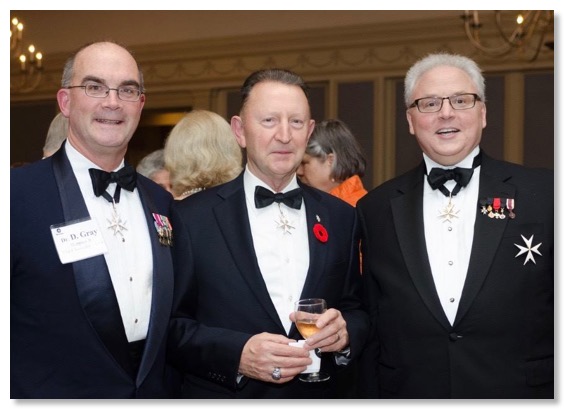
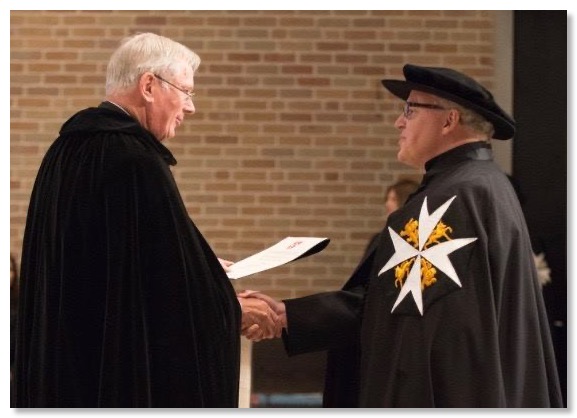
The Founders of the St. John Volunteer Corps
56 years, 11 months: Lapping My Father
Somehow this milestone did not touch me as much as lapping my mother about a year ago did. That may be in part because she struggled to keep going until the end, devoting herself to her various projects until the cancer and the chemotherapy made that impossible. Her life ended with her last, stertorous breath. We had been waiting for that moment through years of illness and remission, and we were there to see the horrible, unedifying end. Then came the packed funeral at the Episcopal church we only visited as a family once a year and the crowds at the cemetery. An epoch was over—mostly in my life and my brother’s, but even in the life of the city. My brother treasured (and squirreled away from me) tributes of all kinds, from simple letters to richly decorated documents that reported that the city council or the county board of supervisors or one of the houses of the state legislature had ceremonially adjourned in honor of her passing.
When my father had died six weeks earlier, everything was much more muted. The world would go on as it had. We would continue to live in a house where the focus of everything was my mother’s pain. My brother, the housekeeper, and the private nurses, tried to keep her comfortable, but what relief the Darvon gave didn’t last from one appointed dose to the next. If anything, a weight was lifted from me: I no longer had to fear living in a house where my mother would no longer be able to restrain the angry, drunken, unpredictable man who would be left as my only parent. That had been my greatest fear, and only our housekeeper was tactless or perceptive enough to suggest that I might be experiencing more relief than grief.
The funeral at the Catholic parish we attended every Sunday was full of people who were “there for Helen,” and my mother left the house—impeccably dressed, as always—for the last time to do her duty to her husband’s memory. But after we got her home from the cemetery, life became again a round of pills and shots and pain. If the city fathers adjourned in my dad’s memory, it was to comfort my mother—and I don’t recall my brother poring over any proclamations of sympathy at that point. Perhaps he was just too busy making sure the nurses arrived on time. Even in our little world, my father’s death had not really changed much at all.
The truth is, it seemed as if my father’s real life had ended long ago. He seemed to spend most of his time asleep: I think I saw him wearing a nightshirt more often than in anything else. At the time, I thought he was passed out drunk all the time, but as I have approached his age myself and found myself wearing a C-PAP every night and being prescribed drugs with names like Nuvigil and Provigil, I begin to think he also had a real sleep disorder that was never treated. Whatever medical problems he had, though, it still seemed that he was drunk more often than not.
I realize that my father during his periods of productive sobriety was less memorable than my father on the rampage from drink or withdrawal or in a stupor beyond all rousing. So, my most intense recollections tell against him. So do even the parts of his life I saw. He wasn’t at his best at home. Other people saw, though less and less, a skillful lawyer or a cheerful companion, while I saw the man they would not have cared to meet.
I have always been the one in the family credited with an accurate memory for everything but names. The odd corollary of that recognition has been that I am also the one kept out of the informational loop. My mother shared family lore with my brother, not with me. On the other side of the family, my guardian aunts were even worse: they went so far as to hide an uncle’s obituary from me lest I learn about something they didn’t like to talk about. I would say their care was pointless—I had already been clued in on that big secret—but perhaps it wasn’t: if I had seen the obit, I would have talked about it, and I can understand why they would have wanted to avoid that. In any case, my memories of my father lack much of the background detail that would soften the grotesque picture my memory foregrounds.
The Harry J. Ragen I knew best was a man damaged beyond repair. He had once, of course, been something else.
Evidently as a boy he had been one of the popular kids. We occasionally got calls even years after his death from old guys who found themselves in San Diego, recalled that they had heard that Harry Ragen had ended up there, and found the name in the phone book. After the disappointment at finding that another guy their age had died too young, there were stories of a happy Iowa childhood, with my father sounding like the gregarious, relaxed boy I never was. He did, as I understand it, have the advantage of having an uncle who owned the town’s movie theater—something that could give a kid a considerable social edge in a small Iowa town in the days before television—but that didn’t seem to be the root of his popularity. He was also, unlike me again, an athlete. He played basketball—he remembered most the Protestant kids on other teams trying to tear the scapulars from the Catholic players’ necks—and tennis. He, or perhaps his brother, may have been state tennis champ.
Like me, he grew up in a house dominated by illness. His father, a haberdasher in Oskaloosa, Iowa, developed pernicious anemia in the days when the only treatment for it was consuming massive amount of raw calves’ liver.* My father remembered with disgust how he would grind it and mix it with orange juice and try to get it down in that form, which I can’t imagine made it much more pleasant. All the same, Harry Ragen, Sr. was an invalid. Family lore had it that my father was even given a driver’s license when he was still underage so he could do some of the family errands, and as a boy I imagined him peeking through the steering wheel of something like our Chrysler Imperial instead of driving a model A. But my grandmother—a figure I knew only as a tiny woman everyone called Mamie—saw to it that the family continued its climb up the American ladder of success. She was eventually named Nebraska Mother of the Year in honor of having seen to it that, despite her husband’s illness and early death, every one of her five children not only went to college, but earned an advanced degree. That she did it during the Great Depression and in an era when few women received degrees of any sort was an achievement that deserves honor. (One daughter earned a Ph.D., two earned master’s degrees; my father and his brother earned degrees in law and medicine.)
Those five siblings formed a bond that was unshakable, even after behavior that would lead many people I know to “withdraw from a toxic relationship that I realized was really co-dependent.” The girls doted on the boys. His sisters, especially the two who never married, were my father’s confidantes and biggest fans and willing slaves throughout his life. Perhaps they acted as “enablers” of my father’s addiction, but I am not sure there is much use in casting real people in the restrictive roles of the 12-step puppet show. They certainly did try to lessen the damage he caused, and they played the same role in the lives of their other brother and of their nieces and nephews. I really don’t think there is any reason to blame them for doing their best to keep several men from hitting rock bottom at terminal velocity.
I wish I knew more about my father’s life beyond the family, but I have no sources. I only know that he earned a Ph.B. in English from Creighton University during what I think of as the heyday of Jesuit education in America. His life as a student? I know that, like other freshmen, he wore a beanie. That’s about it. He went on to earn an LL.B. from the same institution—though he traded it in for a doctoral degree later on so his younger brother with the M.D. wouldn’t be able to lord it over him anymore. (His elder sister, quite rightly, continued to remind them both that any doctorate not awarded on the basis of an “original contribution to knowledge” was merely titular.) Then he made a European tour, getting out of Germany on the last ship for America. (That’s how the story went.) And then he was drafted, in what was then a one-year contingency draft. After Pearl Harbor, he was in for the duration.
I have tried to discover what the war was like for my father. But I have failed. His stories more or less stopped after boot camp and some time he happily spent in a training camp with some of Walt Disney’s cartoonists. After that, next to nothing, though he spent most of the war in the European Theater of Operations, served for a time as encryption/decryption officer for General Eisenhower (he was in the Signal Corps), acted as a JAG officer on a number of cases, and won the Bronze Star for an act of heroism near Bergamo in 1945. (He was then scouting local phone lines in order to use them to connect front line troops with artillery support.) There must have been more stories, and my brother may have heard a few more than I did, but he would prefer me not discuss even what I do recall hearing.
I have procured what records I could from the Army, but much has been lost, and what is left tells me little. My father evidently shared some details of his experiences with my mother, which she was not above using against him during their quarrels. (His smart mouth had evidently lost him a promotion to captain—and telling my mother about it wasn’t a good idea, either.) In hope of understanding my father better, I have read many memoirs of the war. I think most of three books by people I have actually known—though one only at one remove—and genuinely admired: Flights of Passage by Samuel Hynes, Crossing the Line by Alvin Kernan, and Doing Battle by Paul Fussell. Professors Hynes and Kernan—I can’t think of them of as Sam and Al, no matter how often they have asked me to call them that—were my professors at Princeton. They intimidated me—though they did everything they could to be accessible—and as a graduate student I myself was still shyer than I am now. I hoped their memoirs of the war would help me understand my father. They didn’t. They didn’t even help me understand them better. I couldn’t really see how the cocky, exuberant flyboys so vividly depicted in the books could have become the courtly, gentle, intensely learned men I saw in the classroom.†
I did not know Paul Fussell personally, though his son Sam was a friend of mine at Pomona College. (Sam’s own book Muscle is one of the great memoirs—and so far as I can tell he doesn’t say a word that isn’t true, though he omits a great deal, such as his years at Pomona, for narrative effect.) I did hear the elder Fussell speak on several occasions and have loved many of his books, including Poetic Meter and Poetic Form, Samuel Johnson and the Life of Writing, and The Great War and Modern Memory. I thought he was on the road to becoming one of the great American essayists until he let his bitchy persona get away from him. His book on the war may have given me a better idea about my father and the war than any other.
Doing Battle is in some ways an embarrassing read. The author shares too many details. He admits to feelings that are not to be mentioned by either the hip or the stoic. He paints a picture of someone uncomfortably like the person one is trying not to be. In all that Fussell’s book is a great contrast to the memoirs by Hynes and Kernan. Fussell’s is also a much grimmer and more cynical picture of war theirs are. And while the two future Princeton professors seem to feel primarily affection for the Marine Corps and the Navy, Fussell simply despises the Army. I think there are several reasons for these contrasts. First, while Hynes and Kernan came to the service from more or less straightened circumstances, Fussell was a child of privilege: he was the son of a lawyer in wealthy Pasadena, where he had the best possible public education. (Pasadena expected everyone to complete at least junior college.) He had plenty of money, and went on to an elite college—my own Pomona. While Kernan especially sees the U.S. Navy as a true home and doesn’t mind being an enlisted man, Fussell finds the army a place of exile and resents being ordered about by his intellectual inferiors. While Kernan appreciates the well-made uniforms and the ample food, Fussell finds everything either substandard or, frankly, tacky. Of course, the three men are also fighting very different wars. As fliers, Kernan and Hynes risk death, but they kept fairly clean and comfortable while they do it. Between missions there are showers and square meals. As an infantry lieutenant, Fussell sees death face to face, and, perhaps worse for him, lives for days on end with mud and filth and exhaustion. And while the fliers work with men selected for their aptitude and technical skill, Fussell deals with both soldiers and officers who serve where they do because of their lack of specialized skills. He not only suffers more but does it in just the company he would not have chosen.
My father did not come from as privileged a background as Fussell did, and he did not spend as much time being shot at. But coming from a protective and devoted family and having already earned the professional qualification that was much rarer then than it has since become, he may have shared Fussell’s feelings of resentment about the army and his military superiors. He certainly seems to have behaved much as Fussell did. Fussell reports that his responses to his superiors became more and more “snotty.” (That is not a word one often finds in military memoirs.) The same sort of discourse lost my father his captaincy. While I think my father had done more to earn his sense of entitlement than the young Fussell had, they both clearly felt what they were forced to do as a profound affront, one that may have changed the very conception they had of themselves.
But Fussell made a success of his life after the war, and my father did not. He was older than the men who became great English professors and didn’t have the joyous experience of education on the GI bill some of them recount. There were other things that darkened his life. Perhaps the addiction—and while I would not apply that term to most people who drink too much, I think it fits his case—explains it all. But perhaps not. Perhaps the war experiences wounded him psychically. Perhaps he just lacked the faculties that would have allowed him to flourish in the roles he found himself asked to play.
Between the war and the point where my memories begin, he had a life that I can’t find a way to imagine. He never went back to live in Iowa or Nebraska, but after he joined his mother and sisters in California, he built a successful life. He became partner in a law firm. He married an heiress who had a career in journalism. He was active in civic affairs. And then, just as I was becoming old enough to form memories, the collapse came. He left the firm, and his private practice withered. He was unreliable on boards and committees and lost his place on them. He became the man I knew. Was it the war? Was it his brother’s public disgrace? Was it something to do with the upheavals in his nation’s culture? And might he have recovered at least a bit if he had not died suddenly when he was not quite 57?
And what do I take from my father’s example now that I am older than he would ever be? I have already stopped drinking. (I started rather late but caught up to him to a greater extent than I imagined possible.) Having neither wife nor children, I am not hated by them. I get out of bed every day. I never use foul language or call people names. I rarely miss a board meeting. I still may accomplish more than I have yet done. I have not become him. I have not.
* A later note: I have now been diagnosed with pernicious anemia myself. I give myself a shot of Vitamin B12 once a month. When I am tempted to think that progress is a myth, I think of my shot and the scene my father witnessed in the Omaha kitchen with the liver, the grinder, and the orange juice.
† Their subsequent memoirs give a fuller picture. Kernan’s In Plato’s Cave is one of the best memoirs of a life in scholarship I have ever read. And Hynes’s Growing Seasons tells the story of the boy who would become the Marine bomber pilot.
Mark Twain Tonight!
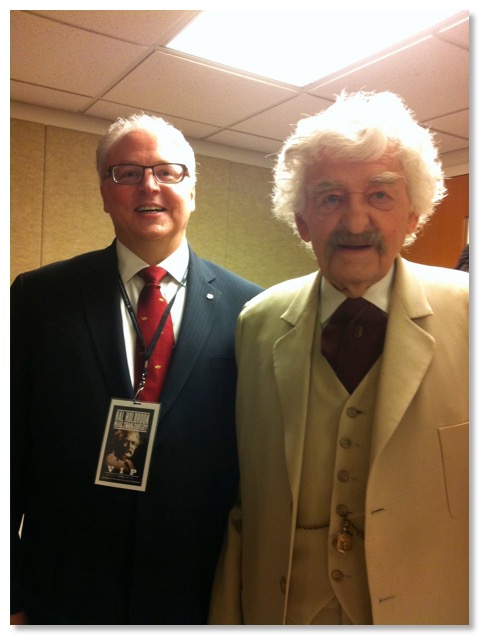
With Hal Holbrook after his performance in “Mark Twain Tonight!” I first saw him perform in this role when I was in High School; he is just as powerful in it now that he is 90. The political jokes—still topical after 100 years—filled the hall with laughter, and his rendition of the Shepardson/Grangerford Feud from Huck Finn had the audience utterly silent, rapt with sorrow and pity.
This was Mr. Holbrook’s second appearance to benefit the Eugene Field House Foundation, of which I am secretary. We preserve the home and memory of both Eugene Field, the poet and essayist whose work your mothers read to you, whether you know it or not, of of his father, Roswell Field, who was Dred Scott’s lawyer as he sued for his freedom. An added pleasure at the even was meeting the Scotts’ great-great granddaughter.
55 years, 11 months, 9 days
I have anticipated this point for some time, and its approach has made me feel quite strange. That might be because I rarely hear anyone else talking about such things. Most friends of my own age still have living parents. My older friends have dealt with parents dying not too early, but, frankly, too late. The first time a person struggling with a parent who had become entirely dependent on his children said, “Brian, you were lucky,” I thought that was a trifle heartless. Having seen more, I now think it was simply true. (And, lest anyone think I had it too easy, my mother’s final illness stretched on for years, and I did not entirely escape the burden of my guardian aunts’ years of decline—although I didn’t have to bear the brunt of it.) My friends don’t think about when they will have lived longer than their parents: they wonder how they’ll live through the years of taking care of them.
My brother crossed this milestone about a year ago, but I don’t expect us to compare notes. He focuses on the positive much more than I do, and he thinks that “dwelling” on this sort of thing unhealthy. But I have been able to talk it over with a cousin. A year after my parents died one after the other of completely unrelated causes, my father’s brother and his wife went the same way. (The Ragen boys’ lungs gave out, due in part to the Judas gene I’m told I have not got; their wives died of particularly cruel forms of cancer.) When I saw Cousin Mike at a family wedding, I think he and I were both relieved to find someone else who was troubled by reaching this point. “It was really freaking me out,” he told me. “I knew I had to do something. So I bought a Bentley.” Cousin Mike is an ophthalmologist and spends his days performing LASIK operations. I’m a professional critic and spend my days thinking about things. We’re both native Californians and grew up at the height of the car culture, when gas was cheap and the highways were empty. That experience gave him a solace he can draw on in times of perplexity. It gave me the subject for a book about trying to escape the burden of the past (It’s called A Wreck on the Road to Damascus.)
I don’t have to think very long about why this milestone is troubling. Everyone’s parents–and their whole generation—are barriers between them and age and death. Once they are gone, one feels exposed to the great, unimaginable fact. That is not something everyone likes to be reminded of. After the funeral of the last blood relative in my mother’s generation, I looked at all my first-cousins on that side of the family and said, “Now that Death has completed his work with our parents’ generation, he can turn his full attention to ours.” I don’t recall that anyone regarded that as a helpful contribution to the family conversation.
Of course, almost all my cousins have the other fence against age and death—children. They may or may not be props in one’s old age—but there is a chance. And even if one never thinks about the “serial immortality” provided by generations of heirs, it would be odd if modern people were not moved and comforted by the same things that succored their ancestors. And they wanted heirs. Before the ancient Hebrews had any real hope of heaven, they counted on being rewarded through their posterity.
Somehow, though, I am the only member of my generation to never get married. And only two of us never had children. (My childless cousin, a divorcé, and I both went to Princeton. The only question in the family is whether the place turned us squirrelly or accepted us because we were that way already.) To add some irony to the story, I, the childless bachelor, have written extensively about the malign influence of the myth of the American Adam, who avoids the role of husband and father, and I have devoted myself to the study of heraldry, as symbolic system that encodes marriage and inheritance, and have even been granted a coat of arms—one that will probably never pass to “the heirs of my body.” No one will ever cry about me as they drive to work or while singing that one particular hymn. No one will ascribe his troubles to me when talking to the therapist. No one will think about me on the day he lives as long as I have.
My mother knew many disappointments, but she escaped the ones I am facing. I do have the model of four spinster aunts—only two of whom were regularly described as “crazy.” None of them ever had even a single cat. (And one of them married when still older than I am now.) There are some literary models for the aging bachelor uncle. As I recall, they tend to be disreputable, Dahl’s My Uncle Oswald leaps to mind, as does Digory’s Uncle Andrew from C.S. Lewis’s The Magician’s Nephew. The popular culture of my formative years gives no better models, unless I want to be Uncle Bill on Family Affair. (If I get Sebastian Cabot as my valet, I’ll take the job, even if it comes with three kids.) Uncle Joe on Petticoat Junction was always “movin’ kind of slow,” but that was just as well, since his sloth was a check on his irascibility. The Beaver’s Uncle Billy was such a rotter and blowhard that they had to transform him utterly before he made a second appearance. A couple decades later Alex on Family Ties got a brilliant bachelor uncle who looked like Tom Hanks—but he turned out to be a violent drunk. Still, there must be exceptions. Uncle Charlie on My Three Sons? Well, I do cook, but I lack the years in the Merchant Marine that would let me wear an apron without looking like a sissy. And the purely literary models are no better. Sterne’s Uncle Toby? Too Protestant. Thackeray’s Major Pendennis? Better connected and worldlier than I can imagine myself. I have to say that spinster aunts come off better in books than bachelor uncles, just as they do on television and in popular culture in general. After all, if you call someone a “funny aunt,” they think she makes people laugh. If you talk about a “funny uncle,” they give you the number of Child Protective Services.
But I hardly need go to a second-degree relative for a model. Though tomorrow I will reach an age mother never did, I have been turning into my mother for years. I have always been the one arranging the parties and hoping people will behave. Lately I have become but a part-time writer and a more-or-less full-time philanthropist, rushing from board meeting to board meeting, and that was how she passed most of her adult life. Sadly, I have not become a social magnet who everyone seems to love, and I have not been placed at the helm of every organization that can attract my support. I suspect, in fact, that people wish that I would just sign my checks and shut up. So I face the days ahead with some trepidation. But perhaps I’ll grow into the role. Besides, I can always buy that Bentley—though the truth is, I am more a Prius sort of guy.